

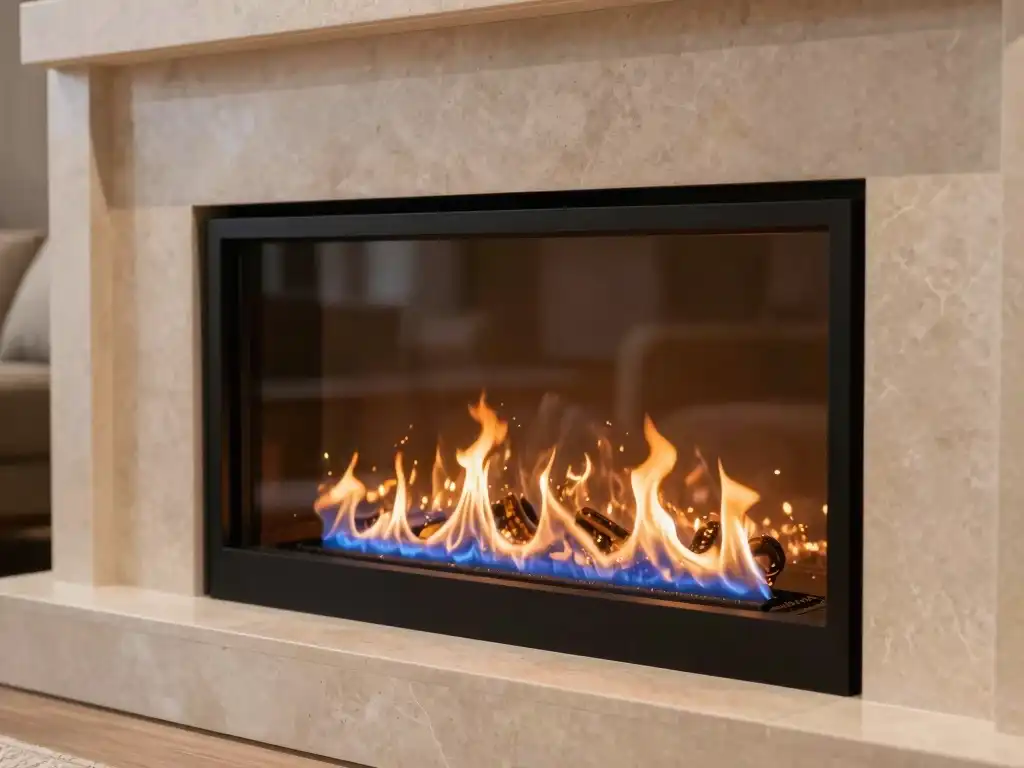
Custom Outdoor Fireplaces Built for Kansas City Homes and Lifestyles
Blueprints first, stone second-that’s the rule for a custom outdoor fireplace in Kansas City that actually works. Think of it less like picking out patio furniture and more like tuning an engine: air intake, combustion chamber, exhaust path, and a frame that won’t shift when our clay soil decides to move. Get those four things right and you’ve got a fireplace that performs on a cold, gusty March evening. Skip them, and you’ve got an expensive lawn ornament that smokes out your guests the first time you light it.
This guide walks you through what separates a well-engineered build from the cheaper installs that look great in listing photos and fall apart the first winter-costs, fuel choices, KC-specific site conditions, and what the whole process actually looks like from first visit to first fire.
What “Custom Outdoor Fireplace” Really Means in Kansas City
A truly functional custom outdoor fireplace in Kansas City typically starts around $8,000-$10,000-and that number isn’t paying for fancier stone. It’s paying for engineered draft, a properly sized footing set into our notoriously expansive clay soil, and code-correct clearances from combustibles. Kit-style units and landscaper builds regularly skip one or all three of those. The chimney’s undersized, the footing’s undersized, and nobody ran a smoke test before the first fire. That’s where the problems start-and they don’t stay small.
One February afternoon, it was 34 degrees and spitting sleet in Overland Park when I met a couple who’d had a Pinterest-perfect outdoor fireplace installed by a landscaper. It looked amazing. The stonework was genuinely beautiful. But the first time they lit a fire, all the smoke rolled straight onto their covered patio and into the kitchen door. I spent three hours out there in the cold tracing wind patterns with a smoke pencil, then designed a taller, properly sized chimney with a modified throat and side wing walls. Before I left, I sketched the whole cross-section on a piece of cardboard so they could see exactly how the smoke path would change after the redesign. When we lit the test fire at dusk, their teenage son stepped outside and said, “It’s the first time I can actually smell wood and not dinner burning.” That’s what a custom outdoor fireplace Kansas City is actually supposed to do.
| Feature | Custom Outdoor Fireplace (ChimneyKS) | Basic Kit / Typical Landscaper Build |
|---|---|---|
| Design Process | On-site smoke testing, cross-section diagrams, airflow modeling before any block is laid | Visual layout only; draft and wind effects rarely considered in advance |
| Footing & Foundation | Engineered footing sized for KC clay soil, slope, and masonry load; reinforced as needed | Minimal or generic footing-often a risk on slopes or expansive soil |
| Firebox & Chimney Sizing | Proportioned to the opening, seating area, and prevailing wind; throat and height calculated | Standard or undersized-common cause of smoke rollout and poor draw |
| Wind & Draft Planning | Prevailing wind direction mapped; wing walls, chimney height, and orientation adjusted accordingly | Rarely addressed; homeowner discovers the problem after the build |
| Expected Lifespan | 20-30+ years with proper maintenance; built to handle KC freeze-thaw cycles | 5-10 years common before cracking, settling, or performance failure |
Typical Cost Ranges for Custom Outdoor Fireplaces in KC
The blunt truth about outdoor fireplaces in Kansas City weather is this: a fireplace that costs significantly less than $8,000 almost certainly cut corners somewhere that will show up inside three winters. Most ChimneyKS custom builds fall into three clear tiers-entry, mid, and high-end-based on size, fuel type, and whether the unit is freestanding or tied into an existing roofed structure. And honestly, I’d rather lose a sale than build something under-designed that’s going to smoke, crack, or tilt on a homeowner who trusted me with their backyard.
Site conditions move the number more than most people expect. A sloped lot in Prairie Village or Parkville can add $2,000-$5,000 to the footing and excavation alone. Gas routing across a long yard, integrating the fireplace into an existing pavilion, or matching a specific stone that requires custom cutting-all of those shift the cost. What I do on every project is draw a simple system diagram early on so homeowners can see exactly where their dollars go: footing, masonry mass, firebox, chimney, finish material, and any mechanical work. No mystery line items.
- ✅
Footing and structural support – especially on slopes, near retaining walls, or anywhere KC clay has room to move seasonally
- ✅
Firebox and chimney/flue materials and size – proportioning these correctly to the opening and seating area is the single biggest factor in draft performance
- ✅
Gas line and shutoff complexity – distance from the meter, trench depth, permit requirements, and inspector coordination all affect the final number
- ✅
Stone, brick, and detailing choices – caps, arches, custom mantels, and specific stone sourcing can add several thousand dollars to an otherwise moderate build
- ✅
Integration with patio, roof structures, and electrical – tying a fireplace into an existing pergola or adding outdoor lighting and TV wiring changes the scope significantly
Fuel and Function: Wood vs. Gas for Kansas City Backyards
When I walk into a backyard for the first time, I always ask: “How do you actually see yourself using this-weeknight button-press or long Saturday wood fire?” The answer shapes almost every design decision that follows. Wood gives you real ambiance, serious radiant heat, and that smell that makes people pull their chairs closer. Gas gives you instant ignition, cleaner operation, and zero ash cleanup at 10 p.m. on a Tuesday. Neither is wrong. But here’s my insider tip: in closer-in KC neighborhoods and communities with active HOAs, gas often is the smoother path-fewer smoke and ember complaints from neighbors, and no city burn ordinances to navigate. The catch is that gas still has to be planned correctly, with proper venting, permitted piping, and burner placement that accounts for KC’s winter winds from the north and northwest. A gas fireplace thrown against the wrong wall in a crosswind creates a dancing, distorted flame that looks bad and heats inconsistently.
- Undersized chimney on wood-burning units – the most common culprit behind smoke rollout; when the flue can’t draw fast enough, smoke finds the path of least resistance, which is usually onto your patio and through your guests
- Gas fireplaces placed in crosswind zones – a gas fireplace facing the wrong direction in a KC yard can have its heat stripped away and flame pattern distorted; it looks bad and performs worse
- DIY or unpermitted gas piping – gas line runs without proper permits and inspections create safety risks and code violations that surface at resale; don’t skip this step
Fuel choice has to be matched to your yard’s layout, your neighborhood’s rules, and KC’s wind behavior-not just to what you saw on Instagram.
Designing for Wind, Draft, and Clay Soil – KC’s Real-World Constraints
On a windy corner lot in south Kansas City, what looks like the perfect photo backdrop for an outdoor fireplace is often the worst possible spot for smoke control. I’ve stood on plenty of those lots with a tape measure and a smoke pencil, watching the winter northwest wind wrap around a fence line and push right into what would have been the seating area. KC’s prevailing winter winds come from the north and northwest, and our freeze-thaw cycles hit clay soil hard-enough to move an undersized footing a quarter-inch by spring. That’s not a theoretical concern. I’ve seen it crack fireboxes and open mortar joints that water gets into, freezes, and widens every winter after. My on-site smoke tests aren’t just theater; they’re how I find the orientation and chimney height that actually work before a single block gets set.
One July evening, just as the sun was dropping behind the trees in Lee’s Summit, I was finishing up a custom outdoor gas fireplace for a retired mechanic who wanted “something I don’t have to fiddle with.” The heat index was over 100 and we were both soaked through, but we took the time to dial in the burner placement and log set layout so the flame pattern looked like a real wood fire-stable, centered, not dancing sideways. The whole point of that session was mapping how the crosswinds moved through his covered patio at different times of day and positioning the burner and media to resist that. Two weeks later, during a surprise thunderstorm, he texted me a photo of his grandkids roasting marshmallows under that covered patio, dry as a bone. The fireplace we’d designed specifically for crosswind stability was doing exactly what it was supposed to do.
There was a Saturday morning in early October in Parkville when I walked into a half-finished project another contractor had abandoned-a massive stone outdoor fireplace that had started tilting because the footing was undersized for the hillside. The homeowner was embarrassed and frustrated. You could see the lean from the kitchen window, just enough to make your stomach tighten. I spent a week carefully dismantling the top section, underpinning the base, and rebuilding with a reinforced footing tied properly into the slope. KC hillsides with clay soil need that footing tied in-not just poured wide, but anchored to resist the lateral forces that come with grade change and seasonal moisture shift. The first time we lit that fireplace on a chilly 48-degree evening, you could feel the mood in the backyard flip from “money pit” to “we’re never moving” in about five minutes. That’s the job.
- ✅
Winter north/west wind direction at the planned seating area – mapped on-site before any dimensions are committed to
- ✅
Clay soil condition and drainage at the footing location – poor drainage accelerates freeze-thaw movement; sometimes the fix is grading, not just a bigger footing
- ✅
Distance to combustibles – fences, siding, soffits, and pergola members all have code-minimum clearances that change the layout
- ✅
View from kitchen and living room windows – this fireplace will be visible 300 days a year, not just when it’s lit; proportions and placement matter year-round
- ✅
Access for maintenance and gas shutoff location – both need to be reachable without moving furniture or tools every time
If you can’t sit comfortably in front of it on a 35-degree March evening, it doesn’t matter how good the stone looks in photos.
From Sketch to First Fire: How Custom Outdoor Fireplace Projects Run
Think of your outdoor fireplace like the engine bay on a classic truck: intake (air coming to the firebox), combustion (the firebox itself), exhaust (chimney and flue), and frame (the footings and masonry structure that hold everything in place). Tune all four together and it runs right every time you fire it up. Skimp on any one of them and you’re chasing problems. I stand in a KC backyard with a tape measure and pencil, draw a side-view and top-down diagram right there-sometimes on a cardboard box, sometimes on a piece of scrap board-and walk the homeowner through how air moves in, how heat radiates out, and where the smoke goes. That sketch is usually when things click and people stop seeing “a fireplace” and start seeing a system.
After that first visit, the project runs in stages with a clear owner decision at each one. Discovery and design: where you gather, how you’ll use it, fuel type, and a realistic budget. Engineering and permitting: footing design for KC clay, gas permits if needed, HOA or municipal coordination. Build phase: excavation, footing, block structure, firebox and chimney, stone or brick finishes, gas hookup. And then the step most contractors skip entirely-final tuning. I light a test fire in real conditions, even if that means standing in the cold in November, and verify that the draft performs the way the design said it would. Then we walk through operation and maintenance together so the homeowner knows their system, not just their fireplace.
A custom outdoor fireplace should feel as good on a cold night as it looks in a summer listing photo-and closing that gap takes real engineering, real local knowledge, and a builder who’ll light a test fire in November just to make sure the draft is right. Call ChimneyKS and Robert will stand in your Kansas City backyard, sketch a cross-section of a system tuned to your wind, your soil, and the way you actually live outside, and give you clear pricing and a straight path to your first real fire.