

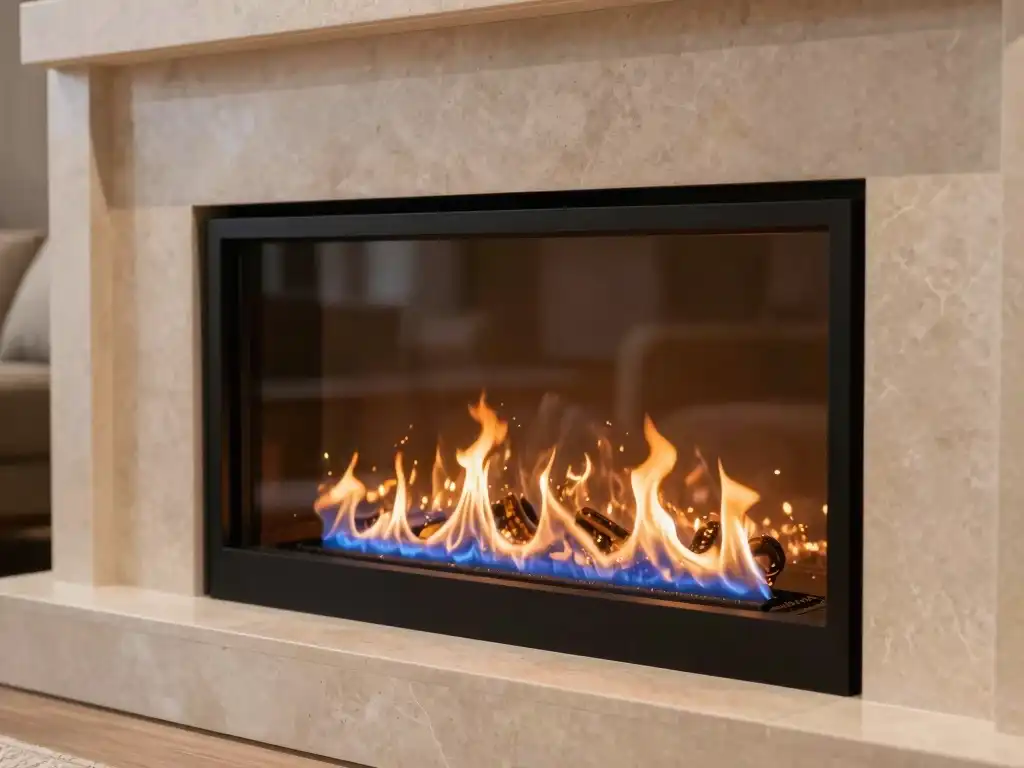
Could Your Fireplace Damper Be Costing You Money in Kansas City?
Whisper-quiet and invisible, a half-open fireplace damper can bleed $150-$300 out of a Kansas City home over a single heating season – a “chimney tax” most people never see coming, and one I’d call the most common fixable money leak I run into on the job. In this article, I’m going to walk you through how to tell if your damper is part of the problem, what it means for your comfort and your bills, and which fixes actually pay off.
How a “Quietly Open” Damper Turns Into a Chimney Tax in Kansas City
Whisper “damper” to most Kansas City homeowners and they’ll shrug – it’s just a lever inside the fireplace, right? If I’m being blunt, your damper is either doing its job or it’s quietly burning through your paycheck – there’s no in-between. A half-open damper during a cold Missouri January isn’t just a minor draft issue. I’m talking a measurable, monthly hit to your gas or electric bill. Ten to thirty dollars a month in peak heating season doesn’t sound catastrophic until you’re staring at a February bill wondering why nothing changed except it got colder. That gap at the top of your chimney is working against every dollar your furnace is spending to keep your living room at 70°F.
Picture the backstage door at a theater left cracked open during a blizzard – heat pouring out into the alley, cold sneaking in around the set pieces, and everyone on stage wondering why it feels wrong. That’s your fireplace with a bad damper. The conditioned air you paid to heat climbs straight up the flue and vanishes, while cold outside air presses in through every other crack in the house to replace it. And here’s what makes this worse: most people have no idea what position their damper is actually in right now. In older Brookside, Waldo, and Overland Park homes, I find original throat dampers rusted half-open year-round all the time. They haven’t “closed” in a decade. They just sit there, doing their quiet damage.
Backstage Leaks: What a Bad Damper Actually Does to Your Heat and AC
On more homes than I can count on the Missouri side of the metro, I’ve walked in and found throat damper plates so corroded you could see daylight around the edges when they were “closed.” Gaps you could fit two fingers through. Top dampers with broken cables that hadn’t moved in years. The building-science explanation is simple: in winter, warm air is less dense and rises. That’s stack effect, and your chimney flue is basically a pre-built exhaust stack waiting to pull your heated air straight out of the house. The higher the temperature difference between inside and out, the harder that suction pulls. Every gap in your damper is stack effect’s welcome mat.
I’ll give you a real number to hold onto. One January morning, right after a freezing rain, I was in Brookside at 7:30 a.m. because a family was convinced their living room was colder with the fireplace present than without it. They weren’t wrong. I found a rusted, half-open throat damper that physically couldn’t close, and when I put my digital thermometer at the firebox opening, we watched cold air pour down like a waterfall – not a ghost draft, an actual measurable cold column of air. The homeowner had a smart thermostat app on their phone. Right there in the living room, we pulled up last month’s gas usage versus the same month the year before. After I fixed that damper and added a top-sealing cap, their next bill dropped by almost a third. The dad looked at the numbers and said, “I thought the fireplace was cozy – turns out it was a $90-a-month hole in the roof.” That line’s stayed with me.
Here’s the unglamorous truth about fireplace dampers that most brochures skip: metal, moisture, and Midwest temperature swings do not age gracefully together. Kansas City’s freeze-thaw cycles crack and warp cast iron faster than most homeowners expect. The older housing stock in Brookside and Waldo – and a lot of the mid-century ranches in Overland Park – has masonry chimneys that were built before airtight dampers were even a priority. Many have unlined or marginally lined flues where moisture sits against the metal for months. Add KC’s humid summers to the mix, and you’ve got a damper that started its life mediocre and is now actively fighting you. It’s not your fault. It’s physics and weather conspiring against old hardware.
| Damper Condition | What It Does to Your House | What You Feel in the Room | Likely Energy Impact in KC |
|---|---|---|---|
| Fully functional, tight seal | Keeps conditioned air inside; only open when in use | Room temp stays steady; no noticeable draft | Baseline – no extra loss from the fireplace |
| Stuck 1″-2″ open year-round | Acts like a small open window at the roofline | Cold “waterfall” in winter; warm, musty air in summer | +10-30% on winter gas bill; extra AC runtime all summer |
| Rust-warped, “closed” but gappy | Constant low-grade infiltration, especially on windy days | Whistling, faint drafts; room never quite comfortable | 5-15% higher heating and cooling costs |
| Missing or permanently open for gas logs | Full-time chimney exhaust sucking out conditioned air | Breezy or chilly even with the fire off | Can rival the cost of leaving a window open all season |
If your damper never really closes, you’re paying to heat the inside of your chimney before you ever heat your couch.
Simple Tests: Is Your Damper Stealing Heat Like a Backstage Draft?
When I’m standing in your living room, my first question is simple: “Do you ever feel a draft right here, even when everything’s off?” And honestly, the best time to run these DIY checks yourself is on a really cold, windy day with the furnace running and the fireplace completely off. That’s when stack effect and wind pressure are working together to exaggerate any leak, and what’s usually a subtle problem becomes obvious. With the gas shut off and the firebox completely cold, you can do a quick closed-damper draft test, a tissue-strip flutter test, and a flashlight-and-mirror look up at the plate – none of these replace a full inspection, but they’ll tell you fast whether you’ve got something worth calling about. Safety note: everything must be cold, gas fully off, no embers, before you look or feel around in there.
A Waldo landlord called me one late-March afternoon – 65°F, breezy, tenant complaining about “whistling windows.” He was ready to replace window weatherstripping all down the front of the building. I walked in, and the windows were fine. It was a warped cast-iron damper plate stuck about an inch open in a disused wood-burning fireplace, and standing in that empty living room I could literally hear the wind rushing down the flue before I even touched anything. A smoke pencil test made the airflow visible and settled the question immediately. We installed a top-sealing damper, and when I checked back a month later the landlord told me the tenant had stopped stuffing towels in the firebox and the building’s shared utility bill had dropped enough to be noticeable on the spreadsheet. What looked like a window problem was a damper problem from the start.
-
✅
Closed-damper draft test: On a cold, windy day with heat running, hold the back of your hand 6-12 inches in front of the firebox opening. A steady stream of air with the damper “closed” means something’s leaking. -
✅
Tissue “backstage door” test: Tape a thin strip of tissue at the top of the opening. If it flutters inward with the damper closed, your house is actively pulling outdoor air down the flue. -
✅
Flashlight & mirror check: With everything cold and off, shine a bright light up past the damper plate. Daylight around the edges or obvious rust gaps mean the plate isn’t sealing. -
✅
Summer smell check: In August with AC on and windows closed, sniff near the firebox. A musty, outside-air smell with the damper “closed” is another reliable leak clue.
- ✅ Have a recent gas or electric bill handy, plus one from the same month last year if possible.
- ✅ Note whether the fireplace is wood-burning, gas logs, or a gas insert.
- ✅ Write down when you last had the chimney professionally inspected and/or swept.
- ✅ Pay attention to when drafts feel worst: very cold days, windy from a certain direction, or only when the HVAC is running.
- ✅ Check whether the damper handle or cable stops firmly in the “closed” position or feels loose and vague.
Pulling Back the Curtain: Repair Options and What They Really Save
I still remember the first time I put a temperature probe into a supposedly “closed” fireplace and watched the numbers jump – not creep, jump – the moment I hit the air column dropping out of the flue. That was twenty-some years ago and it still shapes how I explain repair options to people, because the measurement is what makes the invisible visible. Now, if we step back and look at the whole system, closing the backstage leaks in your home’s performance means a few different things depending on what you’re working with: sometimes it’s adjusting or rehanging an existing throat damper that’s gotten bent out of alignment; sometimes it’s a full throat damper replacement; and for older masonry chimneys that aren’t getting an insert, a top-sealing damper mounted at the chimney crown is often the most effective move – it seals from the top, keeps rain and animals out, and gives you a much tighter closure than a tired cast-iron plate ever will again. Each of those fixes maps to real, conservative savings on a KC gas bill, and I’d rather give you honest ranges than inflated numbers that don’t show up on your statement.
Here’s a call that sticks with me – a Saturday night in December, Overland Park, right before a Chiefs watch party. A couple’s gas fireplace wouldn’t stay lit and the room was drafty with ten people coming over in an hour. I found an “always open for safety” damper configuration that was doing two bad things at once: bleeding heated air out of the house constantly and creating enough competing draft to mess with the gas log set’s performance. I sat on their hearth, tuned the damper system, and installed a proper lock-open device that satisfied code without turning the entire flue into a permanent open hole. Then I showed them on their phone’s energy app exactly how much conditioned air had been escaping every single hour. They still email me each winter – a snapshot of their heating bill and usually a photo of the living room full of people. Getting the damper configuration right for a gas appliance isn’t just an efficiency issue. It’s a safety issue too, and they tend to solve together when you address them the right way.
| Scenario | Typical Solution | Ballpark Cost | Possible Annual Savings |
|---|---|---|---|
| Old throat damper sticks but mostly seals | Adjust/rehang, minor sealing | $150-$350 | $50-$100/year |
| Throat damper rusted, can’t seal | New tight-fitting throat or top-sealing damper | $450-$900 | $100-$200/year |
| Rarely used masonry fireplace with constant draft | Top-sealing damper plus firebox seal option when not in use | $650-$1,100 | $150-$300+/year |
| Gas log set with damper permanently open | Lock-open device + tight top damper, draft corrections | $400-$850 | Highly variable; often $100-$250/year |
| Myth | Fact |
|---|---|
| “Closing the damper doesn’t matter much if the glass doors are shut.” | Glass doors slow air, but the damper is still the real gatekeeper. Leaks above the doors still drain your conditioned air. |
| “My house is old; drafts are just part of the deal.” | Older KC homes do leak more – but a bad damper is one of the biggest, easiest leaks to actually fix. |
| “A gas fireplace needs the damper wide open all the time.” | Gas appliances need correct venting and lock-open devices, but that doesn’t mean the flue has to act like an unsealed hole year-round. |
| “If I don’t feel a strong breeze, the damper must be fine.” | Low, continuous loss bleeds money quietly. A mild draft held constant over months adds up fast on your bills. |
| “Damper fixes are all about smoke, not energy.” | Draft control and energy efficiency are two sides of the same airflow problem. Fixing one almost always helps the other. |
Final Act: When to Call a KC Chimney Pro About Your Damper
Think of your damper like the backstage door at a theater – if it’s cracked open during a blizzard, you’re going to feel it whether the show is on or not. If the room near your fireplace is consistently the coldest spot in the house in January or the stuffiest in July, if your bills seem high without a clear reason, or if you honestly don’t know what condition or position your damper hardware is in, that’s not a situation to leave alone for another season. A damper is a small piece of hardware with an outsized impact on how the whole home performs – and getting it right means your HVAC isn’t fighting a surprise opening in the set every single day it runs.
| Call Sooner Rather Than Later | Can Wait for Your Next Annual Inspection |
|---|---|
| Room with fireplace is noticeably colder in winter or hotter in summer than the rest of the house | Damper hardware is old but still moves smoothly and no strong drafts are felt |
| You feel clear airflow or hear whistling at the firebox with the damper closed | You only use the fireplace a few times a year and haven’t noticed odors or drafts |
| Gas logs or an insert were installed and you’re not sure how the damper was set up | You’re planning other energy upgrades soon and want to bundle a damper check with them |
| Recent energy bills jumped without any change in thermostat habits | You just moved in and are scheduling general fireplace service anyway |
Your damper is a small piece of hardware doing a big job, and when it fails, the whole home’s “performance” pays the price – in higher heating costs, uncomfortable rooms, and money spent warming the Kansas City sky instead of your living room. Give ChimneyKS a call and let’s do a proper damper check with real measurements and clear options, so you know exactly what you’re working with and what it’s worth fixing. Stop paying that chimney tax.