

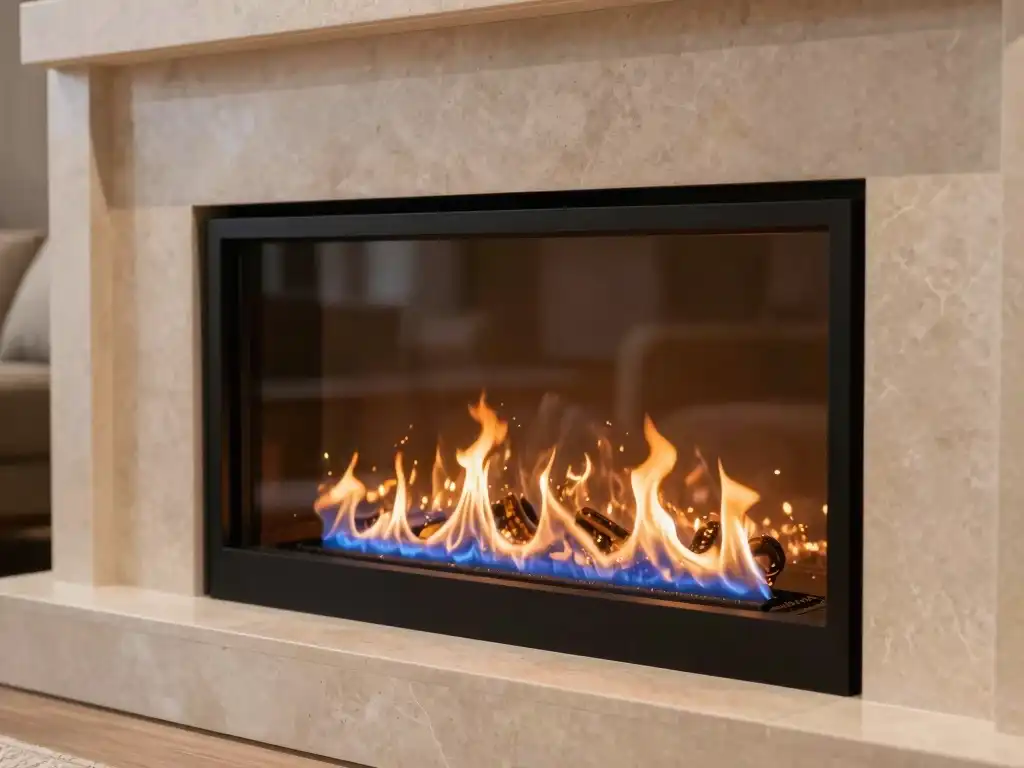
When Exactly Should You Get Your Chimney Inspected?
Calendar answers are easy-once a year-but for most Kansas City homes, that’s just the starting point, not the whole answer. Luis Ortega, the mechanic-minded sweep behind ChimneyKS, is going to walk you through how your actual “mileage,” your warning signs, and what that last storm did to your roof all fine-tune that schedule in ways a simple calendar never could.
The Real Answer: How Often Should a Kansas City Chimney Be Inspected?
Blunt truth time-your chimney doesn’t care what the calendar says, it cares how you use it. That said, once a year is still the right default for anyone who actually burns, and here’s why it’s only a starting point: heavy users-three or four fires a week, wood stove running full tilt-may need a mid-season check on top of that annual inspection, while very light users might stretch to every other year without courting disaster. “Might” is doing a lot of work in that sentence. Even a fireplace that barely ran all winter is still exposed to moisture, animals, and plain old age between burns, and none of those things check the calendar either.
Think of it this way: I always compare chimney inspections to oil changes. Once a year is the safe, simple interval your mechanic puts on the sticker. But stop-and-go driving through Overland Park every day and towing a camper every weekend? That engine’s working harder than highway miles twice a week. The NFPA codes and every certified chimney professional will tell you once a year-and honestly, that’s what I’d do on my own house if I burned even occasionally. The rule isn’t arbitrary; it’s just the shortest safe interval before small problems become expensive ones.
Baseline Rules: When to Get Your Chimney Inspected
-
✅
Burned regularly last winter (1+ fires a week for most of the season) → Get a full inspection every year, ideally before the first cold snap. -
✅
Hardly used it (0-3 fires all year) → Still schedule an inspection every 1-2 years; animals, moisture, and age don’t care how cozy you felt. -
✅
Just moved into a Kansas City home with a fireplace → Get an inspection before relying on it, even if the seller said it was “fine.” -
✅
Switched fuel or added an insert/stove → Inspect right after the change and then yearly; new appliances can stress an old flue differently. -
✅
Big storm, hail, or chimney hit by debris → Schedule a post-event inspection even if you don’t see cracks from the yard.
Your Fireplace “Mileage”: Light, Normal, or Heavy Use?
Let me ask you the same question I ask at every kitchen table in Kansas City: how many fires did you burn last winter, really? Not “a few here and there” – an actual number. That number is your mileage, and it changes everything about when your inspection clock resets. Light use, normal use, and heavy use are not moral categories; they’re service intervals, and the flue doesn’t get extra credit for effort.
One December morning, about 6:15 a.m., I got a call from a guy in Overland Park who said, “My fireplace just coughed at me.” I rolled up in the dark with coffee in hand and found his flue completely choked with creosote because he’d skipped inspections for three winters in a row. I remember standing there, snow blowing sideways, telling him, “If this were your truck’s air filter, it wouldn’t have started three weeks ago.” He was a heavy user who thought because nothing had gone wrong yet, nothing would. That’s the part of the analogy that really sticks with people-the filter doesn’t announce itself until you’re already stuck.
Around KC, the patterns split pretty clearly. The older Brookside and Waldo homes with traditional masonry fireplaces tend to see heavy wood-burning, multiple fires a week through a full Kansas City winter. Newer Johnson County builds often have gas units that get flipped on “occasionally” for ambiance, maybe ten times a season. And then there’s the third group that people don’t think about: homes that were recently remodeled, new windows sealed tight, better insulation, maybe a new high-efficiency furnace sharing the same mechanical space. That house might have a fireplace the owner uses lightly-but tightened-up construction changes air pressure and venting dynamics enough that even light use deserves a yearly check. The usage looks light; the stress on the flue does not.
| Use Category | Typical KC Pattern | Suggested Inspection Interval | Why |
|---|---|---|---|
| Light Use | 0-5 short fires per season, mostly holidays | Every 1-2 years; yearly if the system is older than 20 years | Creosote builds slower, but age, animals, and moisture still quietly work on the flue. |
| Normal Use | 1-3 fires per week in season | Every year (pre-season) | This is like regular commuting-soot and wear add up, and small issues are cheapest to catch yearly. |
| Heavy Use | Multiple fires per week, whole-house heating, or wood stoves | Every year, plus sweep/quick check mid-season | High mileage: more soot, hotter flue temps, and more stress on tiles, liners, and caps. |
| Gas-Only Fireplaces | Decorative or supplemental heat, 10-50 uses per season | Every 1-2 years, or whenever the flame looks off or smell changes | Less creosote, but valves, gaskets, and vents still age; CO issues don’t announce themselves politely. |
If you’d be nervous driving across Missouri with your check-engine light on, you should be just as nervous burning a season with a chimney nobody’s inspected in years.
Moments You Shouldn’t Wait for the Calendar
Three things I look at first, before I even grab a ladder, are how the house smells, what the smoke has been doing lately, and what’s changed about the house itself-new furnace, new windows, roof work, recent storm. Any one of those is what I’d call a “check-engine light” event. The calendar might say your inspection isn’t due for eight more months. The chimney doesn’t care. When something changes-the smell, the draft, the structure around it-that’s the system telling you it needs a look now, not in the fall.
A few years back, on a windy March night, I got an emergency call from a landlord in Midtown whose tenants said the living room smelled “like a campfire in a closet.” By the time I showed up, it was sleeting, and the fire department had already left after clearing some smoke. My inspection found a metal chimney liner that had pulled apart at a joint-something that had been developing over years with no annual check. I still replay the moment I told the landlord, “This is your check-engine light that’s been on for three years,” and he just shook his head because he’d always thought inspections were “optional if nothing’s wrong.” He wasn’t wrong that nothing had visibly gone wrong. The liner just finally ran out of chances to wait.
One August afternoon when it was 102°F and the shingles felt like a griddle, I inspected a chimney for a young couple buying their first house in Kansas City. Their home inspector had cleared the fireplace with a quick glance and a flashlight-totally standard, not their fault. But my camera found a cracked flue tile and an old birds’ nest that had turned into a hard, tar-like plug. I showed them the video on my tablet at their kitchen counter, sweat dripping off my nose, explaining that catching this before closing saved them a winter of smoke backing into their living room. Pre-purchase inspections aren’t about seasons at all-they’re about what’s in that contract and what you’re agreeing to inherit.
A Simple Decision Guide: Is It Inspection Time for Your Chimney?
Think of your chimney like a pickup that tows a trailer every weekend versus one that just sits in the driveway. The one doing the work needs the maintenance schedule. The one sitting there still needs to be checked before you hitch something heavy to it. Use this quick self-check to figure out where you stand right now-no guessing, no waiting for smoke signals.
Quick Self-Check: Do You Need an Inspection Now?
Start at the top and follow your answer down.
Did you use your fireplace or stove at all in the last 12 months?
NO → Has it been more than 2 years since a proper chimney inspection?
If YES: schedule an inspection before your next season or before selling the house.
If NO: plan for one before burning again, especially if storms or roof work happened nearby.
YES → Did you burn more than 10 fires or use it weekly in season?
YES: You’re in the normal-to-heavy use group. Schedule an inspection every year without question.
NO (light use): Check for any warning signs below before deciding to wait.
Warning Signs Checklist – Any YES Means Book It Now:
- New odors (smoky, musty, or chemical) when the fireplace is cold
- Visible cracks, loose bricks, or rusted metal around the chimney or firebox
- Smoke behavior changed, even slightly, since last year
- Major house changes: new windows, new furnace, insulation upgrades, or roof work
Your Chimney Inspection “Maintenance Schedule” for Kansas City Homes
Here’s my honest take: if you only call me when the living room is full of smoke, you’ve already waited too long. Pre-season inspections work exactly like oil changes-painless and cheap when done on schedule, significantly less fun when the engine’s already knocking. For wood-burning systems in KC, late summer or early fall is the ideal window: you beat the first cold snap, you beat the rush, and you don’t end up paying emergency rates because everyone else waited until November. Gas systems and rarely-used fireplaces have a little more flexibility, but “anytime in the off-season” still beats “when something smells wrong.”
Here’s the maintenance schedule I’d put on my own house, and the one I recommend to every customer: annual inspections for anyone who burns with any regularity, two-year maximum for very light use or gas-only systems showing zero symptoms, Level 2 camera inspection before buying or selling, a post-storm damage check any time hail or high winds come through, and a re-inspection after major house changes like a new furnace or tightened windows. And not gonna lie-I’ll say it plainly because it makes people laugh and then remember it: “If you’d yell at your kid for driving 50,000 miles between oil changes, don’t ask your chimney to do the same.” The service intervals exist for a reason. Mileage is mileage.
Scheduling an inspection before there’s smoke in the air is like changing oil before the engine knocks-cheaper, faster, and a lot less stressful. Give ChimneyKS a call and let’s put your fireplace on a sensible inspection schedule built around how your Kansas City home and family actually use it.