

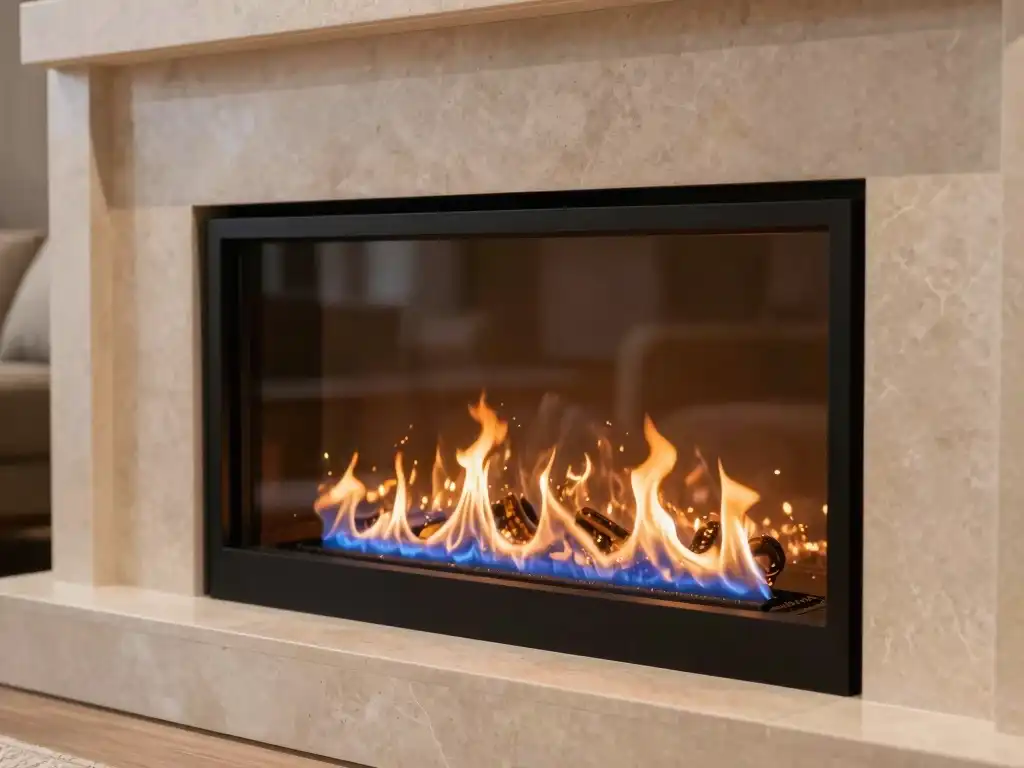
Carbon Monoxide and Your Chimney – What Kansas City Homeowners Must Know
Silent, invisible, and completely odorless – the most dangerous chimney problem in Kansas City arrives with zero warning, and it almost always gets worse on the coldest, windiest days when your house is sealed tight and you think you’re finally safe from the elements. I’m Rick Salazar, a former industrial safety inspector turned chimney specialist, and after 19 years of treating flues and venting systems as life-safety infrastructure – not just building features – I can tell you that carbon monoxide and chimneys in Kansas City are a combination that deserves a lot more attention than most homeowners give it.
Why Carbon Monoxide and Chimneys Are a Bigger Deal in Kansas City Than You Think
Think of your house like a small regional airport. You’ve got multiple planes trying to take off at the same time – furnace, water heater, gas fireplace, maybe a wood stove – and only one or two runways to get them airborne. On a bitter KC winter night with 30 mph wind gusts and a house that’s been buttoned up since October, all those exhaust “flights” are competing for the same runway at once. Cold brick chills the flue gases before they can rise. Exhaust fans claw air from the wrong direction. And when those runways get blocked, damaged, or overwhelmed, the CO that should be flying out of your house starts spilling back in instead – quietly, with no smoke, no smell, and no drama until the numbers on a monitor tell you something is very wrong.
I still replay one January morning from years back. Six-fifteen a.m., 4°F outside, wind absolutely howling, and a Waldo homeowner called in a panic because his carbon monoxide alarm wouldn’t stop going off every time the furnace kicked on. His two kids were shivering in the minivan in the driveway while I worked. What I found in that chimney was a half-collapsed masonry liner and a bird nest jammed like a cork right above the furnace connector – the whole house had essentially become a CO trap, and nobody had any idea. I watched his CO monitor drop from 80 ppm to under 10 after we cleared the flue and installed a stainless liner. That’s the job I replay whenever I’m tempted to “just eyeball it” on a vent call. I don’t eyeball it anymore.
How Your Chimney Can Turn Into a Carbon Monoxide Problem
On a 12° night in Kansas City, your chimney doesn’t care how fancy your thermostat is – it cares whether flue gases have a clear, warm path out. That’s it. Hot combustion gases want to rise. But cold masonry chills them fast, and when you combine that with blocked or cracked flues, a negative-pressure house, and a howling north wind pressing down on an uncapped chimney, those gases don’t rise. They stall. They spill. They come back in through draft hoods, fireplaces, and any gap they can find. That’s stack effect working against you, and it’s exactly what Kansas City winters are built to trigger.
One humid August evening in Brookside, I got called out to inspect a gas log set that the homeowner said “never caused a problem in 15 years.” She’d been having headaches for weeks, and her doctor sent her to check for CO. The damper was half-closed, the chimney had no cap, and a powerful kitchen range hood was pulling negative pressure through the whole first floor. When I held my combustion analyzer in the smoke shelf and kicked on the range hood, I watched the numbers spike in real time. It was like watching a plane clear the runway, get halfway down, and then the tower waves it back – except the “tower” was a $400 kitchen fan, and the exhaust rolling back in was carbon monoxide. That’s how quiet poisoning happens in nice houses with pretty fireplaces.
Here’s an ugly truth Kansas City homeowners don’t hear often enough: your brick chimney can be beautiful and still be a terrible exhaust system. I’ll be blunt – most of the CO problems I find around here come from chimneys that look completely fine from the driveway. Solid mortar, decent cap, no visible cracks. But inside? Collapsed clay tile liners. Gaps where sections have shifted. Flues sized for a 1970s boiler now serving a high-efficiency furnace that barely puts out enough heat to push gases up a cold, oversized runway. A chimney’s curb appeal tells you almost nothing about whether it’s doing its actual job.
- ✅ Collapsed or partially blocked liners (brick, clay, or metal) that trap exhaust before it escapes.
- ✅ Bird nests, leaves, or animal debris acting like a cork near the top of the flue.
- ✅ Oversized old masonry chimneys now serving small high-efficiency boilers or furnaces that can’t warm them properly.
- ✅ Crushed or undersized aluminum liners shared by both a water heater and furnace at the same time.
- ✅ Dampers left partially closed above gas logs or gas log lighters – a setup I see constantly.
- ✅ Strong exhaust fans (kitchen hoods, bath fans, dryers) competing for the same air and physically pulling flue gases back into living spaces.
Common Kansas City CO Scenarios Rick Sees Again and Again
When I’m standing in your basement, the first question I usually ask is, “What kicks on at the same time as your furnace or water heater?” – and sometimes the answer tells me everything. On a drizzly March afternoon, a retired couple in North Kansas City called me for what sounded like a routine chimney cleaning before the grandkids visited. Routine lasted about four minutes. Once I got on the roof, I found an old aluminum liner serving both the water heater and the furnace – undersized to begin with and crushed in two spots where someone had stepped on it years back. In the basement, I held a mirror under the water heater draft hood and watched it fog immediately. That’s exhaust rolling into the room instead of up the flue. The CO was completely invisible, there was no smell, nothing to tip them off. They’d been doing laundry down there for years. That job turned into a full venting redesign, and I drew the whole airflow picture for them on the back of a cereal box while we talked through it.
Now, that’s one house – but the real pattern is the same story told with slightly different details across dozens of older Kansas City neighborhoods. Updated appliances dropped into old flues. Combined vents that were marginal when they were built and are now undersized for modern equipment. DIY “tidying” that sealed off combustion air openings or blocked access panels that might have flagged a problem sooner. From an air-traffic-control view, too many planes are trying to take off from damaged, undersized, or outright clogged runways – and nobody in the house has any idea the flights are failing.
Here’s the insider tip that saves people the most grief: any time you replace a furnace, water heater, or add gas logs or an insert, the venting and chimney have to be re-evaluated from scratch. Not assumed to still work because “it worked before.” The old appliance and the new one are not the same plane – different exhaust volume, different temperature, different pressure requirements. A liner that was barely adequate for a 1988 furnace may be completely wrong for a 2023 unit. This is where I get obsessive, and honestly, this is where most CO problems get planted without anyone realizing it until winter hits hard.
| Scenario | What Homeowners See | What Rick Finds in the Chimney/Vent |
|---|---|---|
| Furnace trips CO alarm on cold, windy nights | Alarm beeping only when the heat runs hard | Collapsed/blocked masonry liner with a bird nest acting as a cork above the furnace connector |
| Headaches near gas fireplace after cooking | Symptoms when the gas log and kitchen hood both run | Partially closed damper, no chimney cap, negative pressure from a strong range hood pulling flue gases back |
| “Normal” water heater with a subtle odor in the basement | Slight warm, stuffy feeling near the laundry area | Undersized, crushed liner with the water heater draft hood backdrafting whenever the furnace or dryer runs |
| Old open fireplace with a gas log lighter | Pretty flames, occasional CO detector chirp | Liner gaps, poor draft path, and a flue never designed for sustained gas appliance use |
If your house can’t get exhaust out fast enough, it will quietly trade fresh air for carbon monoxide instead.
Simple Steps Kansas City Homeowners Can Take Right Now
When I’m standing in your basement, the first question I usually ask is, “What kicks on at the same time as your furnace or water heater?” – because that’s where the air-traffic conflicts live. Think through your own list: furnace cycling, water heater firing, dryer tumbling, kitchen range hood blasting, bathroom exhaust fan running. Any of those can pull air from a shared flue, depressurize a room, or compete for the same exhaust runway at the worst possible moment. You don’t have to be an engineer to map this out – you just have to think of your house as a system where everything is connected, especially the air.
Prevention isn’t one thing – it’s a combination of working detectors, annual professional inspections, and a venting system that’s actually matched to the appliances using it. CO alarms are like smoke detectors for invisible exhaust: don’t assume you’re safe just because one isn’t screaming. They catch problems after they’ve already developed. The chimney and venting network is the flight path that has to be kept clear and correctly built so CO never gets the chance to accumulate in the first place. Both matter. Neither one alone is enough.
- ✅ Confirm you have working CO detectors on every level, especially near bedrooms and near every fuel-burning appliance.
- ✅ Look up at your chimney top from the yard – no cap, or a clearly damaged one, means a pro inspection goes on the schedule today.
- ✅ Note which devices run together – furnace + dryer, gas logs + kitchen hood – and tell your chimney tech that exact pattern at your inspection.
- ✅ If your CO alarm has chirped or shown any reading above zero, stop using fireplaces and gas logs and call for service before using them again.
- ✅ After any furnace or water heater replacement, ask explicitly how the venting was evaluated and whether the chimney was inspected or relined for the new appliance.
- ✅ Never run a vehicle or gas-powered tool in an attached garage, even with the door open – stack effect can pull CO directly into the house through the chimney system.
- ⚠️ Sealing or taping over vents, draft hoods, or combustion air openings to stop cold drafts – this starves appliances of the air they need to burn cleanly.
- ⚠️ Leaving dampers partly closed above gas logs to “keep the heat in” – a partially closed damper above a gas appliance is a CO setup, not an energy saver.
- ⚠️ Adding powerful range hoods or whole-house fans without checking how the new pressure balance affects chimney draft throughout the house.
- ⚠️ Running unvented space heaters or grills indoors when the furnace “isn’t keeping up” – these produce CO with no exhaust path whatsoever.
When to Call a Pro About Carbon Monoxide and Your Chimney
There’s a real difference between “call 911 right now” and “schedule a chimney inspection this week,” and it’s worth knowing which is which. If your CO alarm is sounding steadily, or anyone in the house is confused, nauseated, or faint while appliances are running – get everyone out and call 911 and your gas utility before you call me. That’s not a chimney call, that’s an emergency. But plenty of situations are strong warning signs that don’t require sirens: a CO detector that chirped once and reset, a furnace replacement where nobody evaluated the old masonry flue, a water heater draft hood that seems to backflow when the dryer runs. Those need a venting specialist soon, not someday. And from an air-traffic-control standpoint – if one plane has been grounded because of CO, the whole runway network needs a full review before any other flights take off.
| 🚨 Urgent – Call 911 / Utility First, Then a Pro | 📅 Schedule ChimneyKS Soon |
|---|---|
| CO alarm sounding steadily or reading above 30 ppm on a reliable monitor. | Occasional mild headaches or nausea that only appear when the fireplace or furnace runs. |
| Visible soot streaks or exhaust smell along walls near vents, combined with a CO alarm. | CO detector chirped once and reset, but you’ve never had your chimney or flues professionally inspected. |
| Anyone in the home fainting, disoriented, or vomiting while fuel-burning appliances are running. | You’ve recently replaced a furnace or water heater and nobody inspected or relined the existing masonry chimney. |
| You suspect or confirm a bird nest or debris blockage and a CO alarm has already activated. | You notice the water heater draft hood spilling exhaust whenever the dryer or kitchen fan kicks on. |
Working CO detectors plus a code-correct, professionally inspected venting system is the only combination that keeps your home’s air traffic flowing where it belongs – out, not back in. Give ChimneyKS a call and let Rick run a full chimney and vent flight check before the next cold front rolls through Kansas City and puts every runway in your house to the test.