

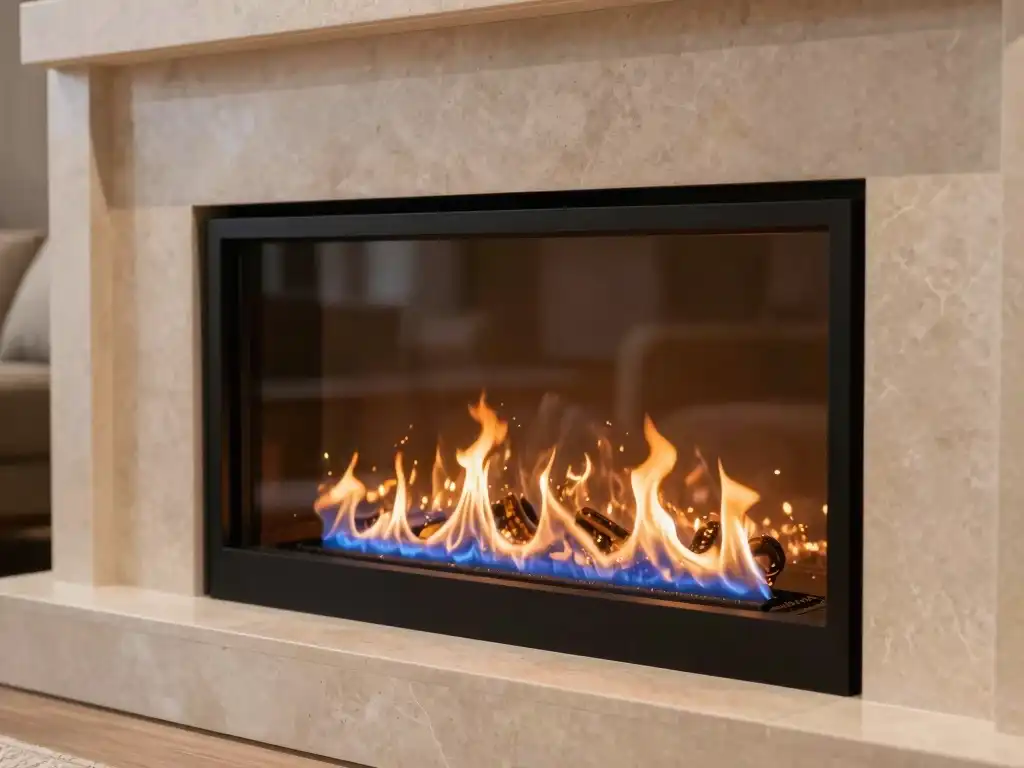
Pellet Stove Installation – Clean, Efficient Heating for Kansas City Homes
I know this sounds backward, but pellet stoves don’t deliver efficiency on their own – the installation is what decides whether that efficiency actually shows up in your living room. In Kansas City homes, especially the older split-levels and ranches that define so many neighborhoods here, the vent path, air path, and placement matter as much as the unit you picked out of a catalog.
Why Pellet Stove Performance Is Really an Installation Story
I’ve been in this work long enough to stop being surprised when a brand-new pellet stove underperforms, and honestly, it almost never comes down to the stove itself. What I’ve learned – first in six winters keeping greenhouse boilers running on the Kansas side, and then in 17 years of chimney and hearth work around this city – is that every heating system has a path the heat wants to take, and your job as an installer is to figure out what that path is before you ever pick up a drill. Pellet stoves are efficient machines, but they’re also creatures of habit. Restrict their exhaust, put them in the wrong corner, leave the termination exposed to the wrong kind of wind, and the efficiency rating on the spec sheet becomes a number that lives only on paper.
Three feet can make or break a pellet stove in Kansas City. A small shift in where the vent exits the wall, where the termination cap sits relative to a roofline or deck, or where the stove lands in the room can change draft behavior, maintenance frequency, and whether any given cold front makes your stove work harder than it should. I remember a Waldo install on a gray January morning – sleet ticking against the side vent cap – when the homeowner was convinced the unit was defective. It wasn’t. The vent termination had been placed exactly where wind curled back under the deck, and I could see the exhaust getting pushed around the second I stepped outside. We moved the termination, adjusted the run, and the stove settled down like it had been waiting all week to breathe. That’s not a stove problem. That’s an installation problem that got fixed with better thinking about exposure and airflow. And honestly, I’m lightly skeptical of any installer who treats the vent path like an accessory – something to figure out after the stove is already in the room. The vent path is the story. The stove is just how it starts.
| Myth | Fact |
|---|---|
| “Any exterior wall works for venting.” | Wall orientation, overhang proximity, wind pattern, and what’s directly outside all affect how well the vent exhausts. Some walls work; others create constant back-pressure problems. |
| “If the stove fits physically, the spot works.” | Fitting in a space and being correctly installed in a space are two different things. Clearances to combustibles, air circulation, and vent routing all have to work together – not just the footprint. |
| “Pellet stoves don’t need much planning because the vent is small.” | The vent diameter is small, but the planning isn’t. Run length, elbow count, termination exposure, and connection quality all affect how the system performs. A short vent run done wrong causes the same problems as a long one. |
| “A premium stove can overcome a poor install.” | It can’t. A high-end stove with a sloppy vent run, a wind-troubled termination, or a missing outside air connection will underperform a mid-range stove installed correctly every single time. |
| “Basements are always the easiest place to install.” | Basements in older Kansas City homes often have complicated vent routing, limited wall options, and fresh air supply challenges that make them some of the trickier installs – not the simplest ones. |
Mapping the Heat Path Inside Your Home
Placement choices that look good but heat poorly
If you were standing next to me during this estimate, the first thing I’d ask is: where do you want the heat to live? Not where do you want the stove to sit – where do you want the heat to move once it leaves the front of the unit. That distinction matters a lot in Kansas City homes, especially in the Brookside and Waldo neighborhoods where older split-levels were built with doorways that don’t line up with stairwells, where rooms turn in unexpected directions, and where a corner that looks perfectly convenient on a Saturday afternoon can quietly fight every BTU the stove produces on a cold Tuesday morning. A stove tucked into a room corner away from doorway alignment might look balanced on a floor plan, but it’s asking heat to find its way around a wall it was never meant to clear. Ranch layouts have their own version of this problem – long, narrow floor plans where a stove at one end is basically decorative for anyone in the back bedrooms.
I’ll tell you the part people usually get backward. The spot gets chosen first – usually for furniture arrangement – and then someone asks whether venting, clearances, and outside air can be made to work around it. I was in a Brookside basement around 7:15 on a weeknight, later than I like to be writing estimates, when a retired couple showed me the corner they’d already mentally committed to. Nice spot visually. Terrible spot mechanically. The fresh air path and clearance requirements were fighting each other in a way that was going to cost real money to work around, and I ended up pulling out my tape measure, a paint stir stick, and the side of a moving box sitting nearby to sketch out why “almost fits” is how heat projects turn into expensive regrets. They called two days later to say they were glad I’d talked them out of the prettier bad idea. Follow that path with me from the stove location to the wall, then outside, then back through the room – that’s the order decisions should happen in.
Bad pellet installs usually announce themselves outside before they fail inside.
Seeing the Vent Route Before the Stove Goes In
Here’s the blunt truth: a good stove with bad venting is still a bad heating system. The vent path is where most of the real trouble lives – termination placed in a spot that catches prevailing wind, too many elbows choking the run, connections that were never tight to begin with, and a layout where no one thought about how they’d ever get in there to clean it. Now trace the route from there – from the stove collar, through each section of pipe, around every elbow, to wherever that termination cap sits outside – and ask whether every connection is properly supported, whether ash can travel cleanly through without collecting, and whether someone can actually service this system without an engineering problem. One of the more memorable calls I’ve taken came after a windy Sunday in Prairie Village, when a homeowner said their relatively new pellet stove smelled like hot pennies every time it ramped up. I found a sloppy install from another company – ash collecting in a vent run that should have been cleaner and tighter, and a connection that had never been properly secured. I cleaned it, fixed the connection, and showed the homeowner the ash in my gloved palm so they could see exactly what the stove had been trying to tell them. Here’s the insider piece on that: ash patterns and odors usually reveal where the venting problem is before any disassembly begins. An experienced installer reads that information before pulling a single section of pipe.
| Vent Design Choice | What Happens in Daily Use | What a Pro Installer Checks |
|---|---|---|
| Short, clean run with minimal bends | Exhaust moves freely, draft stays consistent, ash clears the way it should | Connection tightness, pipe support, and termination clearance from structure |
| Run with multiple elbows | Increased resistance slows exhaust, ash collects at bend points, cleaning becomes more involved | Whether elbow count is within manufacturer spec and whether access points are positioned at each bend |
| Termination in a windy exposure area | Wind-driven back-pressure causes ignition issues, odor intrusion, and erratic burn behavior on gusty days | Cap style, termination height, and whether relocation to a more protected wall face is possible |
| No clean-out access built into the run | Ash accumulates in inaccessible sections; cleaning requires partial disassembly every time | Whether tee cleanouts or access panels can be added at key points before the install is finished |
| Properly planned outside air setup | Combustion stays stable, draft doesn’t compete with interior air pressure, performance holds in tight or well-sealed homes | Whether home construction (especially newer, tighter builds) requires outside air as a practical necessity, not just a code item |
What a Kansas City Pellet Stove Installation Appointment Should Include
Questions worth asking before you hire anyone
Last February, standing in a mudroom with my laser level, I saw the problem before I saw the stove. The previous installer had worked around a wall framing obstacle by angling the vent run in a way that looked fine from across the room and created a low point where ash was collecting with every burn cycle. That’s what a real site evaluation catches – not just whether the stove fits, but what happens to heat, exhaust, and air once the unit is running. A proper install assessment looks at wall construction, stud spacing, vent route sightlines, whether electrical is close enough for the stove’s control board, what outside air options exist, and whether anyone has thought realistically about where heat will actually move in the room once the stove is on. These are not checklist questions. They’re things an experienced installer sees while walking the space.
A pellet stove is a lot like water on a driveway – it’s going to find the easiest path, whether you planned for it or not. The full service process starts with the site visit and works through vent layout planning, clearance and code verification, appliance and vent installation, a test burn with airflow observation, and finally a homeowner walk-through where nothing gets glossed over. When I talk about the path the heat wants to take, I mean it practically: the stove placement, the vent routing, and the outside air supply are all part of the same system, and the performance you feel in the room on a cold morning is the sum of how well each of those decisions lined up. Skip one and the others carry the cost.
Before you hire a pellet stove installer in Kansas City, there are some direct questions worth asking: Do you pull permits where required? Are you installing the vent brand and spec the manufacturer calls for, not whatever’s on the truck? How do you handle outside air – is it part of the standard scope or an afterthought? What does your walk-through cover, and what does support look like if something needs adjusting after the first season? At ChimneyKS, these aren’t questions we dodge – they’re what the whole appointment is built around. We’re not interested in a fast install. We’re interested in a stove that still heats your home the way it should three winters from now.
What happens after the first fire-up
-
☐
Preferred room or zone – Even a general idea of where you want heat (main living area, basement, addition) helps us plan the right questions for your site visit. -
☐
Photos of the proposed wall or area – A quick phone photo of the intended location, the exterior wall, and any overhead clearance issues saves time and helps identify early red flags before we arrive. -
☐
Make and model if already selected – If you’ve already chosen a stove, have the model number available. Manufacturer specs vary enough that clearances and vent requirements need to be confirmed before the visit. -
☐
Whether a standard outlet is nearby – Pellet stoves need a dedicated electrical connection. Knowing whether one is close to the intended location helps scope the install accurately from the start. -
☐
HOA rules or exterior restrictions – Some Kansas City neighborhoods and HOA communities have rules about exterior wall penetrations or vent cap appearances. Worth flagging before termination placement is finalized. -
☐
Home layout type – Split-level, ranch, two-story, or basement install each changes how vent routing and heat distribution gets planned. If you know your layout, mention it when you call.
If you want pellet stove installation in Kansas City done with real attention to vent routing, placement, and long-term performance – not just equipment in and out the door – call ChimneyKS for an honest site evaluation. We’ll walk your space, plan the install right, and make sure the stove you invest in actually heats the way you need it to.