

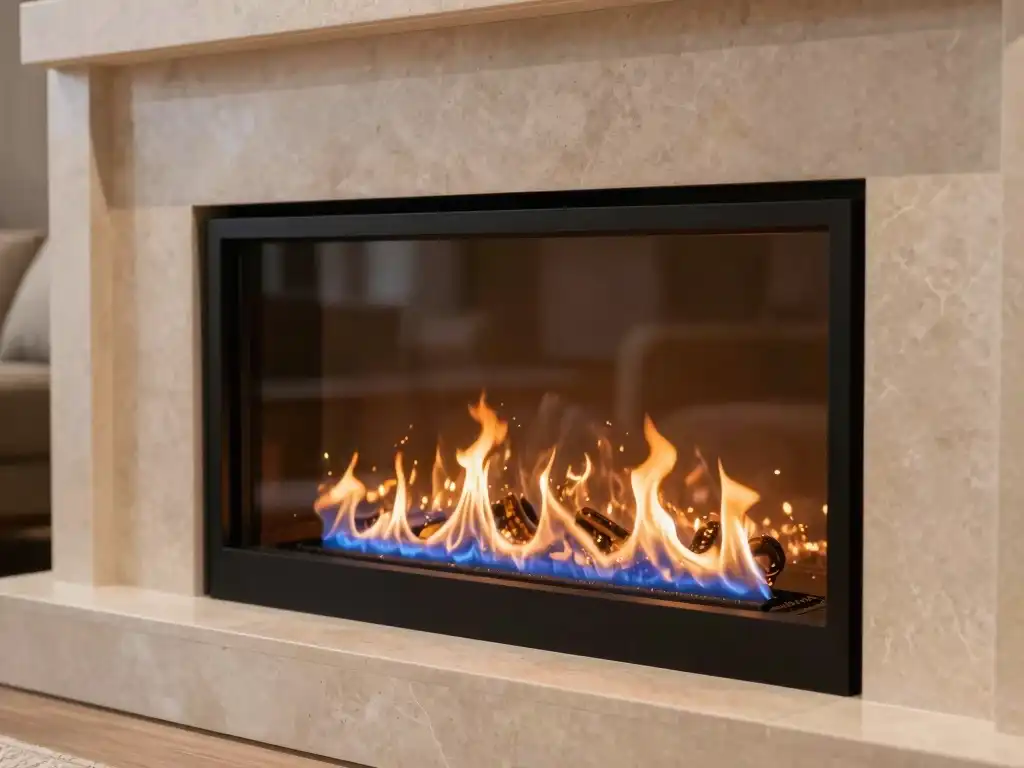
What’s the Real Cost to Install a Fireplace in a Kansas City Home?
Say it’s a Tuesday and you’re sitting at the kitchen table with a browser full of tabs, trying to figure out how much it costs to install a fireplace in your Kansas City home-and every number you find is different by thousands of dollars. Installed prices in this market run anywhere from $4,500 on the low end of a straightforward gas setup to $20,000 or more when a historic home starts telling its own story, and the rest of this article opens one cost drawer at a time so you can see exactly why that spread is so wide.
Real installed ranges in Kansas City, without the fairy tale numbers
$4,500 is where the conversation usually starts, not where the job ends. That number reflects a basic direct-vent gas fireplace on an exterior wall with limited finish changes-a real scenario, but not the most common one. Most finished installs in Kansas City land between $7,500 and $12,000, and complex jobs in older or heavily remodeled homes can push $12,000 to $20,000 or beyond. And honestly, my plainspoken opinion after 17 years of doing this: low numbers usually look cheap because somebody left out half the job. Those are installed prices-not box prices, not appliance-only quotes you find on a product page.
Think of the total price as a dresser with six drawers. The first drawer you pull is the unit itself-the fireplace appliance. Fine. But under that number, there’s another number: venting. Under venting, there’s framing. Under framing, there’s finish work. Keep going and you hit code fixes, gas line or electrical, and labor. Every drawer you open adds something real. The ones that surprise people most are venting and finish work, because they vary wildly depending on your house-and nobody warns you up front.
Quick Facts: Kansas City Fireplace Installation Costs
Lowest Realistic Starting Point
$4,500 installed
For limited-scope gas setups on exterior walls
Most Common Band
$7,500-$12,000
Typical finished install in a Kansas City home
Historic / Complex Range
$12,000-$20,000+
Older homes, heavy remodels, code surprises
Biggest Swing Factor
Venting + Finish Work
Not the appliance unit itself
Where the total jumps after the appliance price
The vent path usually decides whether a quote stays polite or gets honest
Here’s the blunt truth: the appliance price and the install price are related, but they are not interchangeable. One July afternoon in Waldo, I met a homeowner who had bought a fireplace unit from a liquidation site and figured installation would be “basically setting it in place.” It was 96 degrees, I had a laser measure in one hand and sweat running into my eyes, and within ten minutes I knew the unit was wrong for the vent path they had available. The appliance was a deal. The installation was not. That’s the lesson I keep re-learning in other people’s living rooms: the appliance price and the install price are cousins, not twins.
If I’m standing in your house, the first thing I’m asking is: where is this thing actually going to vent? Direct-vent systems pull air from outside and exhaust through a co-axial pipe-great when you have an exterior wall nearby. Inserts need a liner dropped into the existing flue. Systems with longer runs need a routed chase, a roof termination, or a sidewall cap-and every foot of that path has materials and labor attached to it. Access problems add more. Under that number, there’s another number: framing clearances, hearth changes, electrical for the igniter or blower, gas line work if the supply doesn’t land where you need it. Each of those is a separate drawer.
A tape measure tells on everybody. Brookside bungalows, Waldo two-stories, Prairie Village ranches, and the older Kansas City neighborhoods full of historic craftsmans-these houses often have three or four remodels layered on top of each other. You’ll find odd framing from a 1970s addition, an abandoned gas line that goes nowhere useful, a shallow wall cavity that won’t accept the unit you spec’d, or a chase that looks fine from the living room and tells a completely different story from the attic. That’s where low quotes fall apart. Somebody quoted the appliance and the easy version of the install, not the version your actual house requires.
⚠ Don’t Mistake a Product Price for an Installation Quote
A liquidation unit, a big-box store fireplace, or an online deal might look like a shortcut-but vent compatibility, required clearances, gas supply routing, and local code compliance don’t care what you paid for the box. An incompatible unit can turn a “$1,800 deal” into the most expensive option on the table once you factor in the work required to make it actually legal and safe to run in your home.
Three house conditions that blow up the ‘simple version’
I was in a Prairie Village living room last winter when this exact misunderstanding came up. A couple had been budgeting $3,500 for a gas fireplace insert-that’s what they’d seen online, and honestly, two other contractors had let them believe it was in the ballpark. By the time I traced the old flue, checked the condition of the chase, and found a framing clearance problem that needed to be corrected before anything went in, the real number was closer to $8,900. They weren’t upset about the cost once I laid every drawer out on the table. They were upset that three people before me had let them walk around with a number that was never going to work.
It’s a little like buying an old pinball machine-the cabinet may look great until you open the back. I spent six years restoring machines out of a warehouse in the West Bottoms, and I can tell you: the pretty outside and the functioning inside are two entirely separate conversations. A Saturday call near Loose Park drove that home again a few years back. A family wanted a wood-burning fireplace converted before Thanksgiving, and the husband kept saying, “We just need the simple version.” Once I opened the access panel and found an old abandoned gas line going nowhere useful, cracked masonry in the firebox, and no usable electrical within a reasonable run, I had to tell him the “simple version” had left the building sometime around 1984. We got them a safe, solid setup-but the cost changed because the house had a different story than the listing photos did. These are the drawers that surprise people most.
6 Hidden Conditions That Add Real Cost
A deteriorated or improperly sized flue can’t be used for a new insert or conversion without a liner replacement or full rebuild-and that cost is significant.
Code requires specific clearances between the firebox and combustible framing; older homes frequently don’t meet current standards and need correction before installation.
Gas fireplaces need a dedicated circuit for igniters, blowers, and remotes-if there’s no outlet nearby, you’re adding an electrician to the project.
If the existing gas supply doesn’t land within a practical run of the install location, extending it adds plumber time, materials, and potentially wall access work.
Cracked fireboxes, spalled brick, and deteriorated mortar joints are not cosmetic-they’re structural and safety issues that have to be corrected before anything else goes in.
The surround, mantel, hearth, drywall patching, and trim are real labor-and they’re frequently omitted from first-call quotes that only cover the mechanical side.
Use this decision path before you ask for estimates
Bring the right details, or the quote will be a guess wearing work boots
Do you know whether you’re pricing a new fireplace, an insert, or a conversion? Those are three different scopes with different venting requirements, different structural implications, and different price floors-and accurate estimates only come from matching the right system to the actual vent path and wall or chimney conditions before anyone starts talking about stone surrounds or mantel finish.
Common cost questions homeowners ask after the first quote lands
Most post-quote objections aren’t really about the math-they’re scope questions in disguise. Somebody quoted you the appliance and the easy version, and somebody else quoted you the full job, and now the numbers look like two different projects. And honestly, they might be. The insider move here: ask every bidder to break out unit, venting, rough-in work, finishing, permit, and repair allowances as separate line items. Once every bid is organized the same way, you’re comparing actual scopes instead of arguing about a bottom line that means different things to different contractors.
The real installed cost is only real if every drawer gets opened-not just the one that makes the quote look good.
If you want a real number instead of a bait-and-switch quote, ChimneyKS can come out to your Kansas City home, inspect the actual conditions, open every cost drawer in front of you, and give you an estimate you can actually use.