

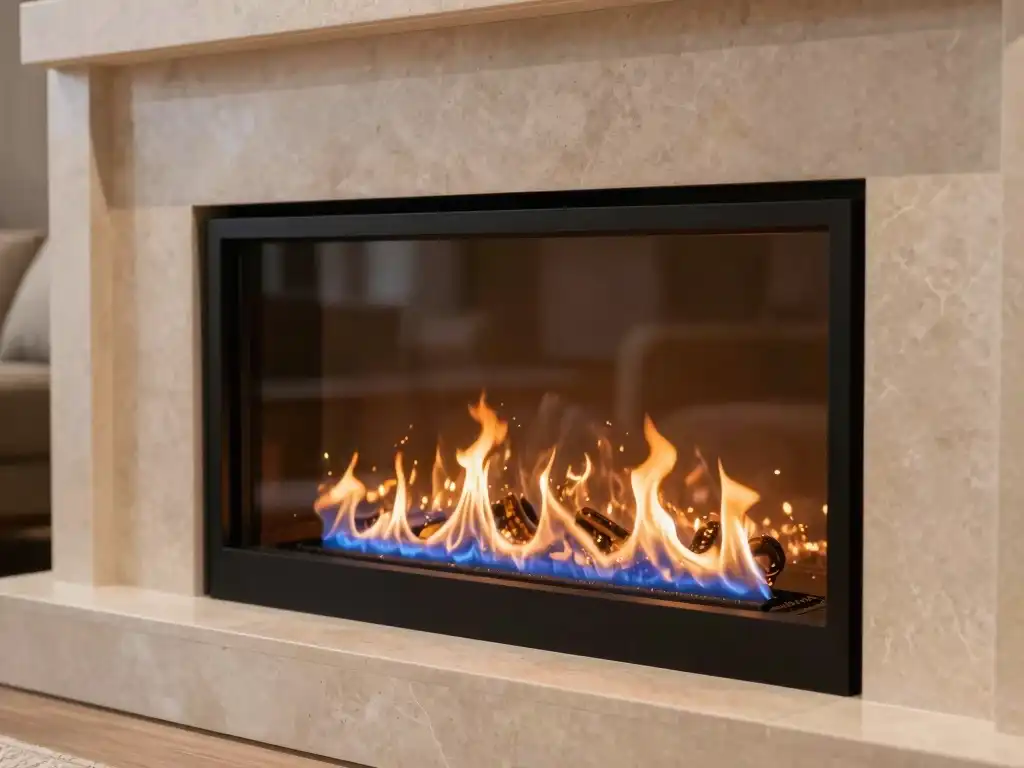
How a Chimney Flue Failure Leads to CO in Your Kansas City Home
Invisible and odorless, carbon monoxide from a failing chimney flue usually announces itself as “just winter fatigue” in Kansas City homes-mild headaches, poor sleep, kids napping more than usual-right up until someone ends up in the ER. I’m Dale Herrera, former KCFD paramedic turned flue specialist, and I’m going to walk you through exactly how CO escapes a damaged flue and how to recognize the early warning signs before this becomes a medical emergency.
How a Failing Flue Turns Your Chimney into a CO Source, Not a Safety Valve
Nineteen winters of crawling through Kansas City attics and basements have taught me one thing: CO problems almost never look dramatic from the outside. The brick face can look completely solid while the actual working parts-the flue tiles, the liner, the sealed joints-are quietly falling apart. Low-level CO from a failing flue rarely knocks anyone down right away. Instead, it builds gradually, and the symptoms blend seamlessly into normal winter life: a persistent headache that you blame on dry air, nausea you blame on stress, a night where nobody slept well and everyone just chalks it up to the cold. That slow build is exactly what makes it dangerous.
I’ll be blunt-if your chimney flue is cracked, blocked, or mismatched to your appliance, it does not matter how “nice” your fireplace looks. I tell homeowners this constantly, and it surprises them every time. Here’s the medical framing I use, because it’s the most accurate one I know: your flue is your home’s lungs and blood vessels. When it’s healthy, combustion gases travel a clean path from the firebox up through the liner and out the crown. When flue tiles crack or joints open up, that’s internal bleeding-exhaust leaking sideways into brick cavities instead of moving up and out. Weak or reversed draft is low blood pressure-the system isn’t moving gases with enough force to keep them going the right direction. And CO buildup in your living space? That’s organ failure. A fireplace can look museum-quality from the living room and still be silently poisoning the people sitting in front of it. How pretty it looks has nothing to do with whether the gas management system is sick.
One January morning, about 5:45 a.m., I got a call from a firefighter I used to ride with. He was standing outside a split-level in Overland Park where the family’s CO alarm kept chirping and nobody could find the source. Eleven degrees out, wind cutting sideways, gas company had already shut off the furnace. I traced it back to a cracked clay flue tile in an old masonry chimney that someone had tried to patch with regular mortar. The exhaust was bleeding into the brick and seeping out through an upstairs bedroom wall-not out the top of the chimney where it belonged. The family had been calling their headaches “winter dehydration.” They were one night away from a serious poisoning. The flue hadn’t been a safety valve for months. It had become a CO source path, quietly feeding exhaust into the structure of the house itself.
What Flue Failure Looks Like from a CO Perspective
Flue Condition
Cracked or missing clay tiles
CO Risk – What’s Actually Happening
Exhaust leaks sideways into brick cavities instead of rising out – internal bleeding.
Flue Condition
Oversized, unlined flue on a gas appliance
CO Risk – What’s Actually Happening
Cooler exhaust loses buoyancy and falls back – low blood pressure in the venting system.
Flue Condition
Blocked or partially blocked flue
CO Risk – What’s Actually Happening
Pressure builds and gases push through any weak spot they can find – a blocked artery.
Flue Condition
DIY patches with regular mortar
CO Risk – What’s Actually Happening
Scar tissue that fails under repeated heat cycles, reopening leaks at the worst possible time.
⚠ Treat These as Emergencies – Not Maintenance Calls
- CO alarm sounding or chirping repeatedly anywhere in the home while a fireplace, furnace, or gas appliance is running.
- Multiple people or pets with headaches or nausea that only appear when a fireplace, stove, or gas insert is in use.
- Visible smoke or exhaust smell near walls or ceilings away from the fireplace or firebox opening.
- Known DIY flue patches, missing liner sections, or severe tile damage with any gas appliance still connected to that flue.
- Any chimney fire or lightning strike followed by unusual smells, staining, or symptoms in the house.
If alarms are sounding: leave the house immediately, call 911 or your gas utility, and do not use the appliance again until a professional has inspected the entire flue.
Follow the Path: How Exhaust Is Supposed to Move-and Where a Bad Flue Leaks
Think of Your Flue Like Lungs and Blood Vessels
Think of your flue like a set of lungs-if parts of it are scarred, pinched, or leaking, the whole “body” of your home starts to behave differently under stress. Here’s the clean path: fuel burns in the firebox, hot gases rise into the smoke chamber, travel through the liner tiles or metal flue, and exit through the crown and cap at the top. That path works because hot gases are less dense than cool air and want to rise-draft is the engine that keeps exhaust moving the right direction. Now, in older Kansas City neighborhoods like Brookside and Overland Park, you’ve got masonry chimneys built decades before high-efficiency gas appliances existed. When those chimneys were built, the flue was sized for roaring wood fires, not the cooler exhaust from a modern gas insert. Add tight weatherized windows, powerful range hoods, and strong temperature swings across a KC winter, and the pressure balance inside that house changes constantly. Where failures happen: missing tiles leave gaps into the brick cavity. Broken joints let exhaust bleed sideways. Unlined stretches inside the masonry give exhaust nowhere defined to go. Cold outer walls chill the gases before they can exit, and Kansas City wind hitting the cap can push pressure back down. Every one of those conditions pushes CO somewhere it doesn’t belong.
Now, Follow the Path with Me from Firebox to Bedroom Wall
Now, follow the path with me through a real case. A few summers ago, during one of those 98-degree, humid-as-soup Kansas City afternoons, I inspected a Brookside bungalow where the homeowners had converted from an old wood stove to a high-efficiency gas insert. The installer reused the oversized masonry flue without relining it. The cooler, lighter exhaust from that high-efficiency appliance wasn’t dense enough to draft cleanly up a flue built for roaring wood fires-it was like pumping thin water through a pipe sized for mud. When the AC kicked on and depressurized the house, air currents pulled those gases back down and into the basement family room. The homeowners only noticed something was off because their dog refused to stay downstairs. My combustion analyzer showed CO spikes over 150 ppm at couch level when the system cycled. The flue’s “blood vessels” were mismatched to the new “heart”-and CO was recirculating through the home’s body instead of exiting it.
| Flue Section | What It Should Do | How It Fails & Leaks CO |
|---|---|---|
| Smoke Chamber | Funnels combustion gases from the firebox into the liner | Spalled or open joints let gases bleed into surrounding masonry before reaching the liner |
| Clay Tile / Liner Section | Contains exhaust and channels it upward through the chimney | Cracks or missing tiles create direct paths for CO to migrate into brick and wall cavities |
| Offsets & Joints | Maintain a sealed, continuous path even where the flue changes direction | Mortar deteriorates at offsets; gases escape at joints and pressurize hidden cavities |
| Unlined Masonry Section | Older chimneys relied on masonry itself-this is inherently porous | CO permeates through brick directly into adjoining framing, attic space, or occupied rooms |
| Chimney Crown / Cap Area | Protects the flue opening from water, debris, and downdraft | Cracked crown lets water in to accelerate tile failure; missing cap creates downdraft that pushes CO back down |
| Wall / Attic Interface | Chimney passes through building envelope-should be sealed and thermally isolated | Gaps at framing penetrations allow CO that has leaked into the chimney chase to enter living spaces directly |
| Common Myth | What’s Actually True |
|---|---|
| “We can’t be poisoned-we barely use the fireplace.” | Even occasional use can push CO through a cracked flue. It only takes one cold evening with the wrong conditions. |
| “If the brick looks solid, the flue is fine.” | The brick face is the last thing to show damage. Internal bleeding in the tile can be severe while the exterior looks pristine. |
| “Gas inserts don’t need liners like wood stoves do.” | Gas appliances often need a properly sized liner more than wood fires do-their cooler exhaust won’t draft correctly in an oversized masonry flue. |
| “If the gas company shut off the appliance, the problem’s solved.” | Shutting off fuel stops the bleeding temporarily. The broken “organ”-the flue-is still broken and will cause the same problem the moment the appliance runs again. |
| “The CO alarm going off must mean the alarm is bad.” | CO alarms trip for a reason. Low-level symptoms in the home-headaches, fatigue, nausea-almost always appear before a full alarm, and those symptoms were the first signal. |
Real Kansas City Cases: How Flue Failures Show Up in Everyday Life
CO Problems Rarely Look Like a Movie Scene
I’ll say it again because it’s the thing that saves lives: CO problems from flue failures usually look like normal life. Headaches on the couch. Kids sleeping an hour longer than usual. Pets gravitating toward certain rooms and avoiding others. Nobody’s collapsed on the floor-that’s the movie version. The real version looks like a tired family getting through winter. That split-level in Overland Park I mentioned earlier? The family had been living with low-level exposure for weeks before the alarm chirped. Then there was a late October call in Lee’s Summit-first cold snap, couple lighting their fireplace for the first time of the season. They kept getting CO alerts, but only when the fireplace and kitchen range hood were running at the same time. Not all the time. Not dramatically. Just enough to trip the alarm and confuse everyone, including the gas company tech who cleared the appliance and left.
Winter Headache Spots and “Comfort” Complaints
When I walk into a house, one of the first questions I ask is, “Where do you sit when you start getting that winter headache?” It tells me more than a visual inspection does. In the Lee’s Summit case, the answer was “the living room, near the fireplace.” What I eventually found was a missing section of flue tile behind the master bedroom-completely hidden inside the chimney chase. The powerful range hood over their stove was creating enough negative pressure in the house that when both the fireplace and the hood ran simultaneously, exhaust was being pulled out through that gap and directly into the wall cavity instead of rising out the top of the chimney. We only caught the full picture because I insisted on running everything at once-fireplace, furnace, dryer, range hood-while watching the manometer and CO readings dance around like a bad EKG. The homeowners had been describing it as a “drafty, stuffy smell” near the hallway. Not a safety problem. A comfort complaint. That’s how these things hide.
Headaches that only show up in one room are not “just winter”-they’re a symptom until proven otherwise.
Step-by-Step: How a Pro Diagnoses CO Risk from a Flue Failure
Follow the Path with Me, From Burner to Bedroom
When I walk into a CO-concern job, I’m not just peeking up with a flashlight and calling it done. Follow the path with me: I start where the fuel burns, trace where the exhaust should go, identify where house pressure might tug it sideways, and map every damaged section that could be leaking. The difference between that approach and a casual inspection is that I recreate real-life conditions. I run the fireplace and the furnace at the same time. I flip on the range hood. I run the dryer. Because CO doesn’t always show up when one thing runs-it often shows up when the house is doing everything a family does on a cold Tuesday evening, and the pressure balance inside shifts just enough to pull exhaust in the wrong direction. That’s the condition that’s actually going to hurt somebody, and that’s the condition I need to see on my instruments before I can give you an honest answer about what’s happening in your home.
From “Internal Bleeding” to a Stable Venting System
The repair sequence follows the same logic as medical triage. First, stabilize: shut down the appliance and stop active CO exposure-that’s stopping the bleeding. Then locate and repair the damaged organs: cracked or missing tiles, inadequate or missing liner, compromised chase or attic interface. Then retest to confirm the vitals have returned to normal-draft reading where it needs to be, CO at zero ppm at the appliance, zero ppm at every room the flue passes through. Here’s an insider tip I share with every client: if an inspector can’t show you camera footage from inside the flue and CO or draft readings taken while the appliances are actually running, you haven’t truly ruled out flue-related CO risk. A flashlight inspection in a cold chimney on a calm day tells you almost nothing about what that flue does when the house is under real operating conditions. Ask to see the data. Any legitimate specialist will show you.
Dale’s CO-Focused Flue Inspection – Step by Step
| Tool | Purpose | Role in CO / Flue Diagnosis |
|---|---|---|
| Combustion / CO Analyzer | Measures carbon monoxide concentration at appliance and in room air (ppm) | Confirms whether CO is actually present, at what levels, and whether it rises when appliances run together |
| Draft Gauge / Manometer | Measures pressure difference between flue and house-the engine behind exhaust movement | Shows when draft reverses or drops below safe levels, indicating exhaust is coming back into the building |
| Inspection Camera | Provides direct visual of flue interior from firebox to crown | Pinpoints exact location of cracked tiles, missing liner sections, open joints, and blockages-visible evidence you can review |
| Smoke / Draft Candle | Produces visible smoke to trace actual airflow paths in the chimney and room | Makes pressure imbalances visible-smoke drawn toward a crack or wall gap shows exactly where exhaust is leaking |
| Moisture / Surface Temperature Reader | Detects abnormal moisture or heat at chimney wall surfaces | Warm or wet spots on interior walls near the chimney chase often indicate exhaust gases condensing inside the masonry-evidence of internal leakage |
Staying Ahead of Flue Failures Before They Become Medical Emergencies
Here’s how I think about flue maintenance after 19 years of this work: it’s chronic condition management, not emergency response. A chimney with small cracks and questionable patches is like a patient with elevated blood pressure and a family history of cardiac events-you don’t wait for the collapse to start paying attention. You schedule the checkups. You don’t ignore the small symptoms. And when something shows up on the instruments, you act on it fast. A chimney is a gas management system first and a decorative element second-and if it fails at the gas management job, nothing else about it matters. Annual inspections, proper relining when appliances change, and taking “comfort complaints” seriously instead of filing them under “drafty old house” are the three habits that keep a Kansas City home out of the CO emergency category.
| When | Recommended Action | Why It Matters |
|---|---|---|
| Every year | Level 1 inspection and sweep for active fireplaces; visual flue and cap check for gas appliances | Catches small tile cracks, mortar failures, and blockages before they progress to CO-level failures |
| Any fuel / appliance change | Level 2 flue inspection and appliance-to-flue sizing assessment before first use | Mismatched flue-to-appliance sizing is one of the most common CO causes in KC homes; catch it before it harms anyone |
| After any chimney fire, lightning strike, or major structural event | Level 2 or higher inspection before using the appliance again | These events routinely cause internal tile fractures invisible from outside-exactly the “internal bleeding” scenario that leads to CO exposure |
| Every 5-7 years in older KC homes | Camera inspection of all flues even without symptoms or alarms | Many Brookside, Overland Park, and Lee’s Summit chimneys are 40-70 years old; tile deterioration accumulates silently over time |
| Any time CO alarm sounds during appliance use | Immediate shutdown of all appliances + professional CO and flue evaluation before resuming use | The alarm is a vital sign, not a nuisance. It sounded for a reason. Treat it like chest pain-rule it out with data before you dismiss it. |
Questions Dale Hears Most Often in Kansas City
How do I know if my CO problem is actually the flue and not the appliance itself?
The appliance and the flue are a system-both can contribute. A CO analyzer measures what’s leaving the burner versus what’s accumulating in the room; if room CO is higher than burner output, the flue is almost certainly leaking exhaust back in. That’s why I test both together and separately.
Do gas inserts and direct-vent fireplaces still rely on the chimney flue?
Gas inserts that vent through the existing masonry chimney absolutely depend on the flue-and need a properly sized liner to do it safely. True direct-vent units with sealed, dedicated pipes are more independent, but those pipes still pass through walls and chases that can fail. Don’t assume “gas” means “no flue concerns.”
If the gas company shut off my appliance, is it safe once they turn it back on?
The gas company confirms fuel shutoff-not flue integrity. Their job is getting gas out of the equation. The flue damage that caused the original problem is still there the moment the appliance runs again. You need a flue inspection and repair before restoring service.
Can small flue cracks be monitored, or do they always need repair right away?
Hairline cracks in a wood-burning flue used occasionally can sometimes be monitored through annual inspection. Any crack in a flue attached to a gas appliance needs evaluation and usually repair-gas exhaust is cooler and wetter than wood smoke, which means it penetrates small cracks more aggressively and produces CO closer to the breach.
What should I tell my doctor if I suspect low-level CO exposure from my chimney?
Tell them exactly what you told me: recurring headaches, nausea, or fatigue tied to appliance use or specific rooms, especially in winter. Ask for a carboxyhemoglobin blood test. CO clears from blood quickly, so timing matters-test as soon as possible after a symptomatic episode. Bring the test results when you call me; it helps piece together the exposure timeline.
Why Kansas City Homeowners Trust ChimneyKS with CO and Flue Problems
19 Years of Kansas City Chimney Work
Following a full career as a KCFD paramedic, Dale has spent nearly two decades diagnosing the root-cause venting failures behind CO calls across the metro.
The Specialist Inspectors Call
Dale is known regionally as the technician other inspectors call when a flue problem keeps failing and nobody else can find the cause.
Real Data, Real Explanations
Every inspection includes CO readings, draft measurements, camera footage, and a hand-drawn airflow diagram-so you understand the risk in plain terms, not just contractor jargon.
EMS-Level Urgency for CO Cases
CO-related flue failures are prioritized for scheduling-not queued for two weeks. Dale knows from his paramedic years that low-level exposure doesn’t wait for the next available appointment.
Fully Licensed and Insured Across the KC Metro
Serving Kansas City, MO and surrounding communities including Overland Park, Brookside, Lee’s Summit, and Shawnee-with proper licensing and insurance on every job.
Your chimney flue is a critical part of your home’s life-support system-not just brick and tile you never see-and ignoring a small crack or a CO alarm “chirp” is the venting equivalent of ignoring chest pain. Call ChimneyKS and let Dale run a proper CO-focused flue inspection, sketch out exactly where your home’s exhaust is actually going, and put together a clear repair plan so your Kansas City home stays safe all season long.